
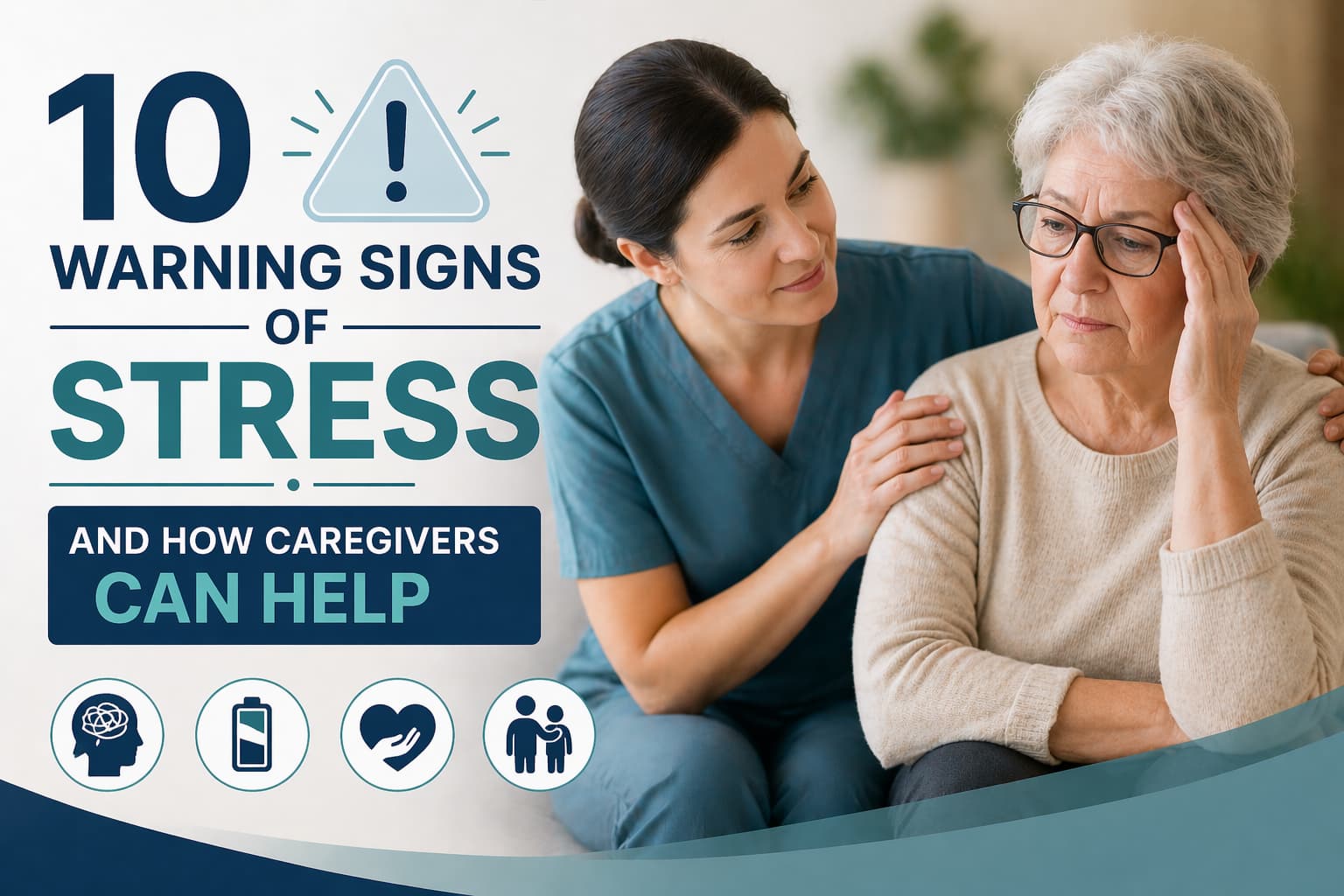
Stress in caregiving often builds slowly and silently. However, when it is ignored, it can affect both health and care quality. Many people do not notice the early caregiver stress symptoms, so problems become worse over time. Understanding the warning signs early can protect both the caregiver and the patient.
At Premier Care Colorado, we understand how important caregiver well-being is for providing safe and consistent support. In this guide, you will learn what a sign of caregiver stress is, how to identify burnout, and how proper support can improve daily care through simple caregiver stress management steps.
What Is Caregiver Stress?
Caregiver stress is a state of physical, emotional, and mental pressure caused by long-term caregiving duties. It happens when responsibilities become too heavy without enough rest or support.
Caregiver stress is also known as burnout when it reaches a serious level and affects daily life and health.
10 Clear Warning Signs of Caregiver Stress You Should Not Ignore
Caregiver stress does not appear suddenly. Instead, it grows slowly and affects both mind and body. When these signs are ignored, they can lead to burnout and poor care quality. That is why early awareness is very important.
1. Constant Physical Exhaustion
Caregivers feel tired all the time, even after getting rest. This tiredness reduces energy and focus during daily care tasks. As a result, simple responsibilities start feeling harder than usual. This is one of the most common caregiver stress symptoms.
2. Mood Swings and Irritability
Small problems start triggering anger, frustration, or emotional reactions. Caregivers may lose patience more quickly than before. This change in mood can affect communication with the patient. This is an early sign of emotional stress buildup.
3. Loss of Interest in Daily Life
Caregivers slowly stop enjoying hobbies, social time, or personal activities. They focus only on responsibilities and ignore self-care. Over time, this affects emotional balance and happiness.
This leads to weaker mental health and low motivation.
4. Poor Sleep Quality
Stress often causes difficulty falling asleep or staying asleep. Caregivers may wake up multiple times during the night. Because of this, daytime energy becomes very low. Lack of sleep also affects focus and decision-making.
5. Feeling Mentally Overloaded
Daily tasks start feeling too heavy and hard to manage. Caregivers feel like they have too much work and too little time. This is a strong answer to what is a sign of caregiver stress. It often leads to emotional exhaustion.
6. Frequent Body Pain and Headaches
Stress affects the body as well as the mind. Many caregivers experience headaches, back pain, or muscle tension. These physical symptoms make caregiving even more difficult. Ignoring these signs can worsen health over time.
7. Constant Anxiety and Overthinking
Caregivers begin worrying too much about small issues. They may overthink decisions or fear mistakes. This reduces confidence and affects clear thinking. It also increases mental pressure every day.
8. Irregular Eating Habits
Some caregivers lose their appetite, while others eat more than usual. Both changes affect energy levels and overall health. Poor eating habits also weaken the immune system. This makes stress effects even worse.
9. Social Withdrawal and Isolation
Caregivers start avoiding friends, family, and social activities. Most of their time goes into caregiving duties. As a result, loneliness increases and emotional health declines. This isolation makes stress harder to manage.
10. Ignoring Personal Health Needs
Caregivers often skip medical checkups or ignore their own health problems. They focus only on the patient and forget self-care. This is a serious warning sign of burnout. Without care, their health can decline quickly.
Caregiver Roles and Responsibilities
Understanding caregiver roles and responsibilities helps reduce confusion and stress. A caregiver usually supports:
- Daily personal care
- Medication reminders
- Emotional support
- Safety monitoring
- Communication with family
When roles are clear, stress becomes more manageable.
Caregiver Stress Management Strategies
Good caregiver stress management is important for long-term care success. Simple habits can reduce pressure and improve health.
Take Regular Breaks
Short and regular breaks are very important for recovery and energy reset. When caregivers step away from tasks for a few minutes, they reduce mental pressure and improve focus. In addition, breaks help prevent burnout and keep the mind fresh for better decision-making.
Share Responsibilities
Family members should actively share caregiving duties instead of leaving everything on one person. This reduces workload, lowers stress levels, and creates a stronger support system. As a result, caregiving becomes easier and more balanced for everyone involved.
Stay Organized
A simple daily schedule helps caregivers manage time more effectively. It reduces confusion, avoids missed tasks, and keeps routines smooth. Moreover, organization helps caregivers feel more in control and less overwhelmed during busy days.
Talk to Someone
Sharing feelings with friends, family members, or support groups is very helpful for emotional release. It reduces stress and helps caregivers feel understood and supported. Talking openly also prevents emotional buildup and improves mental well-being over time.
Caregiver Stress Relief Tips
Effective caregiver stress relief tips include:
- Deep breathing exercises
- Light physical activity, like walking
- Healthy sleep routine
- Listening to calming music
- Spending a short time on hobbies
These small actions improve mental balance.
How Caregivers Can Help Reduce Stress
Caregivers can also help each other by improving teamwork and communication. When support systems are strong, stress becomes easier to manage.
Additionally, proper training and understanding of care routines reduce pressure during emergencies. As a result, care becomes safer and more stable for everyone.
Why Early Action Matters
When caregivers ignore stress for a long time, it slowly affects both their physical health and the quality of care they provide. As pressure builds, they may feel exhausted, lose focus, and struggle with daily responsibilities. However, early awareness of caregiver stress symptoms helps identify problems before they become serious.
When caregivers take timely action, they can prevent burnout and protect their emotional well-being. In addition, early support improves confidence, stability, and decision-making in daily care. As a result, both emotional strength and patient care quality become better and more consistent over time.
FAQs:
1. What are the main qualities of a good caregiver?
A good caregiver shows patience, respect, responsibility, and compassion. They also have strong communication skills and focus on the safety and comfort of the patient.
2. What does a caregiver do daily?
A caregiver helps with personal care, meal preparation, medication reminders, mobility support, and emotional companionship. Their main role is to make daily life easier and safer.
3. How do I know if a caregiver is well trained?
A well-trained caregiver has basic care training, understands health needs, follows safety rules, and can handle emergencies calmly and effectively.
4. Why is a caregiver important for seniors?
Caregivers help seniors stay safe, healthy, and independent at home. They also provide emotional support, which reduces loneliness and improves quality of life.
5. Can a caregiver also provide emotional support?
Yes, caregivers not only help physically but also offer emotional support by listening, spending time with patients, and reducing feelings of stress and loneliness.
Managing Caregiver Stress Effectively
Caregiving is a meaningful job, but it also brings pressure. Knowing the warning signs, understanding caregiver stress management, and using simple caregiver stress relief tips can protect health and improve care quality. When caregivers stay healthy, they provide better support, stronger attention, and safer care for every patient.
Need trusted care support? Premier Care Colorado is here to help you and your loved ones.