

Grocery Shopping

Best Ways to Make Grocery Shopping Easier for Seniors Who Can’t Drive

Imagine opening the fridge and realizing fresh food is running low, yet getting to the store feels difficult. For many families, this is a daily concern. However, with the right planning and support from Premier Care Colorado, grocery shopping can stay simple, safe, and stress-free for seniors who no longer drive.

Practical Ways to Support Seniors Who Can’t Drive

Supporting seniors who cannot drive requires planning, patience, and the right resources. Families can make grocery shopping easier by combining smart preparation, safe travel options, and reliable support services. With small adjustments, seniors can continue accessing fresh food while maintaining independence and confidence. Trusted support from providers like Premier Care Colorado helps families create safer, stress-free shopping routines that fit seniors’ daily needs.

Plan Ahead

First, planning makes a big difference in elderly shopping. Create a clear grocery list before leaving home. As a result, seniors stay focused and avoid extra trips. Next, sticking to the list helps control spending and saves energy. In addition, eating before shopping improves concentration and strength. Finally, checking deals or coupons early helps stretch the budget and reduces time spent inside the store.

Simple Steps That Make Grocery Shopping Safer and Easier

Grocery shopping becomes manageable when seniors follow simple, structured steps. Choosing the right time, reducing physical strain, and using delivery or in-store assistance all lower risk and stress. These small actions help seniors stay safe while shopping and make the experience more comfortable and enjoyable, even without driving.

Choose the Best Time and Place

Timing matters when shopping for elderly adults. For example, shopping during quiet hours lowers stress and reduces long lines. Moreover, many stores offer senior-friendly hours, which create a calmer experience. Also, choosing familiar stores makes movement easier and helps seniors find items quickly. Because of this, shopping becomes more comfortable and less tiring.
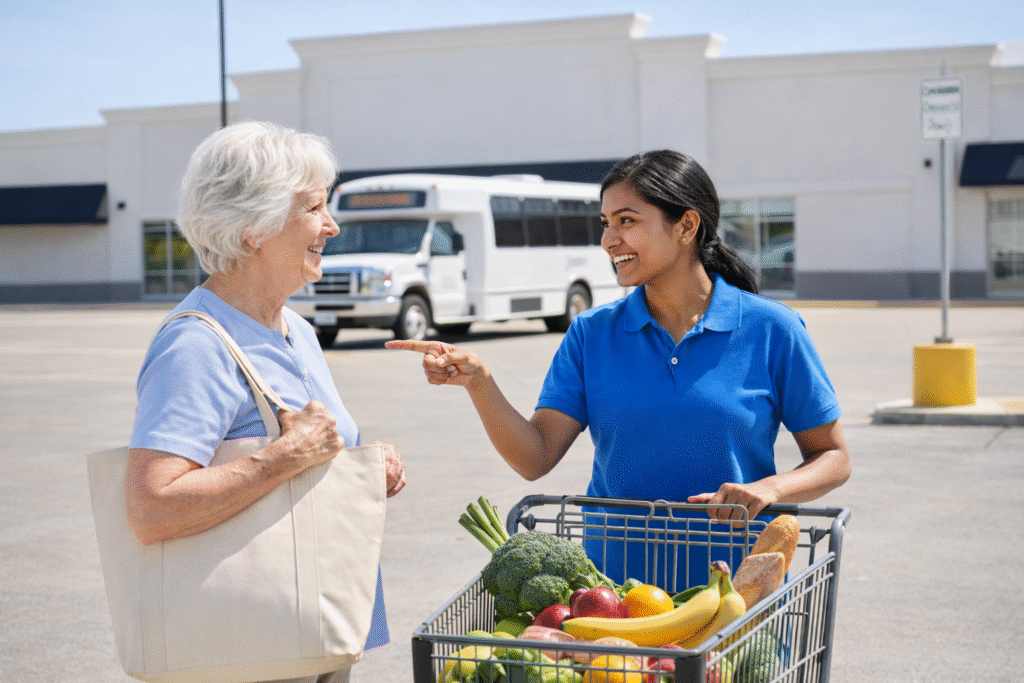
Grocery Shopping

Use Grocery Delivery and Online Options

Online Grocery Delivery

When travel becomes difficult, delivering groceries to the elderly offers a dependable solution. Online grocery ordering allows seniors to receive fresh food directly at their doorstep without leaving home.

Meal Kit Services

Meal kit services simplify food shopping for the elderly by providing pre-measured ingredients and clear cooking instructions, which reduces effort and confusion.

Prepared Meal Delivery

Prepared meal deliveries save time and energy by offering ready-to-eat meals, making daily nutrition easier for seniors who prefer minimal cooking.

Community Meal Programs

Local programs such as Meals on Wheels support seniors by ensuring consistent access to nutritious meals, especially for those who need ongoing shopping assistance.

Reduce Physical Strain

Carrying heavy items can be risky during elderly grocery shopping. Therefore, rolling carts or tote bags help seniors move groceries safely. Keeping bags light prevents strain and fatigue. Also, buying foods that last longer reduces how often seniors need to shop. As a result, daily energy levels stay balanced.

Travel Alternatives

When stores are nearby, walking short distances may work for shopping for old people who feel steady. Otherwise, ride-sharing, carpooling, or public transport provide safe options. Cycling with baskets can also help some seniors. These choices support independence while reducing reliance on driving.

In-Store Tips

  • Stick to the outer aisles to find fresh foods faster and avoid extra walking.


  • Plan a simple shopping route to reduce movement and save energy.


  • Ask store employees for help with reaching items or getting assistance at checkout.


  • Bag groceries carefully to protect food and make them easier to carry.

Embrace Technology

Technology now plays a key role in shopping assistance. Store apps help manage lists, schedule deliveries, and apply digital coupons. Subscription meal kits also provide regular food deliveries without repeated ordering. Because of these tools, doing the grocery shopping becomes easier and more predictable.

Safety and Enjoyment

Safety always comes first during shopping for the elderly. Bringing a companion adds support and confidence. At the same time, enjoying the process reduces stress and keeps seniors motivated. With proper planning, independence stays intact while risks remain low.

Make Friends with Store Employees

Store staff often recognize regular shoppers. Friendly interaction helps seniors get quick assistance, helpful tips, and support during checkout.

Smart and Safe Bagging

Overpacked bags make carrying groceries harder. Using lightweight or reusable bags keeps items secure and reduces strain. Asking for help at checkout also improves safety.

Grocery Delivery and Curbside Pickup

Delivery and curbside services remove the stress of in-store shopping. Ordering non-perishables online also reduces how much seniors need to carry.

Senior Companionship While Shopping

Shopping with a companion adds safety and confidence. Companionship helps seniors reach items, move comfortably, and enjoy the outing instead of feeling overwhelmed.

Faqs:

How to get groceries if you don’t drive?

Use grocery delivery services, meal kit subscriptions, curbside pickup, or rely on ride-sharing, carpooling, or a caregiver to safely get food home.

What is the 3 3 3 rule for groceries?

This rule suggests keeping 3 types of protein, 3 types of fruits, and 3 types of vegetables stocked at home, so seniors always have balanced meals ready.

What is the 321 rule for groceries?

The 321 method helps plan shopping: 3 meals, 2 snacks, 1 dessert or treat per day. It simplifies planning for older adults and avoids overbuying.

What is the best practice when buying food items for an older adult?

Prioritize easy-to-prepare, nutritious, and safe-to-handle foods. Stick to a list, buy in manageable quantities, and avoid slippery packaging or heavy items.

What is the 5 4 3 2 1 grocery method?

This method is a simple shopping guideline: buy 5 fruits, 4 vegetables, 3 protein sources, 2 dairy items, and 1 treat. It keeps meals balanced and reduces decision fatigue for seniors.

How Caregivers Make Grocery Shopping Easier for Seniors

Caregivers play an important role in reducing the stress of grocery shopping for seniors who can’t drive. From planning lists and arranging deliveries to providing companionship and physical support, caregivers ensure shopping stays safe and manageable. Their help allows seniors to maintain independence while families gain peace of mind knowing daily needs are handled with care.

Get help from Premier Care Colorado today. Our caregivers make grocery shopping safer, easier, and stress-free.

Ageing brings changes that can make daily life harder for seniors. Simple tasks like bathing, walking, remembering medicine, or even talking to someone can become difficult. Many older adults also feel lonely when they spend too much time alone, which affects their emotional well-being. This is where carer support for seniors plays an important role. 

Caregivers are full support systems who provide physical and emotional support for the elderly, helping seniors feel safe, respected, and connected. They support daily care and independence, making life easier and more comfortable at home. At Premier Care Colorado, these services are delivered with trusted, compassionate care.

Why Caregiver Support Matters

Carers are important because they:

  • Improve daily comfort
  • Support health and safety
  • Reduce loneliness
  • Help families manage care
  • Encourage independence

Their role is not just physical help; it is complete life support for seniors, strengthening in-home caregiver services

1. Personal Care and Daily Living Assistance

Personal care is one of the most basic needs of seniors. Caregivers provide physical support for seniors by helping with daily tasks that maintain hygiene, comfort, and dignity.

They support seniors with:

They support seniors with bathing and personal hygiene, grooming like hair and nail care, dressing and toileting assistance, meal preparation and feeding support, and light cleaning to maintain a safe and comfortable home environment.

Example:
A senior with weak knees may find it hard to take a bath safely. A caregiver helps them step in and out safely, reducing the risk of falls.

2. Mobility and Physical Support

Many seniors struggle with movement due to age, illness, or injury. Caregivers provide caregiver assistance for seniors by helping them move safely and stay active.

They assist with:
  • Walking and transferring from bed to chair
  • Light exercise and movement
  • Preventing falls at home
  • Supporting wheelchairs or walkers

Real-life situation:
A caregiver may help a senior take short walks inside the house to improve blood flow and strength.

3. Medical and Health Support

Health care is a key part of senior life. Caregivers help manage health needs and ensure treatment plans are followed correctly, supporting the role of caregivers in elderly care.

They help by:

They help by tracking symptoms and changes in health, managing medications on time, assisting with doctor visits, and updating family members about the senior’s health, ensuring proper care and safety.

Example:
If a senior forgets their medicine, the caregiver reminds them and ensures the correct dosage is taken.

4. Emotional Companionship

Emotional support is just as important as physical care. Many seniors feel lonely or ignored, especially if they live alone. Caregivers provide strong emotional support for older adults.

They provide:

They provide friendly conversations, active listening, sharing hobbies or daily activities, and emotional comfort during stress, helping seniors feel supported, valued, and less lonely.

Example:
A caregiver sitting and talking with a senior for 30 minutes daily can reduce loneliness and improve mood.

5. Social Engagement Support

Staying socially active keeps seniors mentally healthy. Caregivers support senior independence at home care by helping them stay connected to others.

They are supported by:

They encourage family visits, help seniors attend community events, support religious or social gatherings, and reduce isolation by keeping them socially active and connected.

Real-life example:
A caregiver may take a senior to a family gathering or park visit so they stay connected with loved ones.

6. Mental Stimulation and Cognitive Support

Mental activity keeps the brain strong. Caregivers help seniors stay mentally active through simple activities, improving and maintaining independence in older adults.

They encourage:

They encourage memory games and puzzles, reading books or newspapers, talking about daily topics, and engaging in creative hobbies like painting or gardening, helping seniors stay mentally active and engaged.

Example:
Playing a simple word game daily can improve memory and focus in seniors.

7. Emotional Safety and Stress Support

Seniors often feel anxious due to health issues or life changes. Caregivers provide strong in-home caregiver support for the elderly by creating a safe emotional space.

They help by:

They help by giving reassurance and support, reducing fear and anxiety, assisting with sadness or grief, and creating a calm home environment, helping seniors feel safe and emotionally stable.

Example:
A caregiver staying with a senior during a hospital visit can reduce fear and stress.

8. Family Support and Care Coordination

Caregivers also help families manage senior care better. This reduces stress and improves elderly care and independence support.

They are supported by:
  • Organizing appointments
  • Updating families about health
  • Managing daily care schedules
  • Ensuring consistent care routines

Real-life situation:
A working daughter may not have time to manage her father’s medical visits. A caregiver handles this responsibility smoothly.

Benefits of Caregiver Support for Seniors

Caregiver support helps seniors live safely, independently, and with dignity while improving their emotional and physical well-being.

1. Personal Care Benefits

Seniors feel clean, safe, and respected in their daily routine with home caregivers for elderly support.

2. Mobility and Physical Health Benefits

Better mobility, fewer injuries, and improved physical health under senior caregiver responsibilities.

3. Medical and Health Management Benefits

Better health control and fewer medical complications with caregiver responsibilities in elderly care.

4. Mental Stimulation Benefits

Better memory, sharper thinking, and improved mental health are roles of caregivers in ageing adults.

5. Emotional Well-being Benefits

Reduced loneliness and stronger emotional well-being through senior well-being support.

6. Social Connection Benefits

Stronger relationships and improved happiness with in-home caregiver services for the elderly.

7. Emotional Safety Benefits

Emotional stability and a strong sense of safety with caregiver support for senior independence.

8. Family Support Benefits

Less stress for families and better organised care through caregiver support for seniors.

FAQs

  1. What skills are important for a good caregiver?

A good caregiver needs patience, communication skills, basic health knowledge, problem-solving ability, and compassion to handle seniors with care and respect.

  1. How do caregivers handle emergencies?

Caregivers stay calm, provide first aid if needed, contact medical services quickly, and inform family members to ensure the senior gets immediate help.

  1. Do caregivers also support mental health?

Yes, caregivers support mental health by offering companionship, reducing stress, encouraging activities, and helping seniors stay socially connected.

  1. How do caregivers build trust with seniors?

They build trust through regular communication, respectful behavior, consistency in care, and by understanding the senior’s personal needs and preferences.

  1. What makes caregiver support important in home care?

Caregiver support is important because it allows seniors to stay in their own homes safely while still receiving professional help for daily living and emotional well-being.

Real-Life Impact of Caregivers

Caregivers change the daily life of seniors in a powerful way. An elderly person living alone may struggle with loneliness, missed medicines, and limited movement. With senior independence at home care, life becomes more active, safe, and structured.

They start eating better, moving more, and feeling emotionally supported. Most importantly, they regain confidence in daily living.

Supporting Seniors for a Safer, Happier Life

Caregivers play a vital role in improving both the emotional and physical well-being of seniors. They assist with daily needs, support movement, manage health care, and provide emotional comfort. Most importantly, they make seniors feel valued and cared for. With proper caregiver support for seniors, seniors can live safely, happily, and independently in their own homes while maintaining dignity and quality of life.

Start your care journey today with Premier Care Colorado and give your loved ones the safe, compassionate support they deserve.