
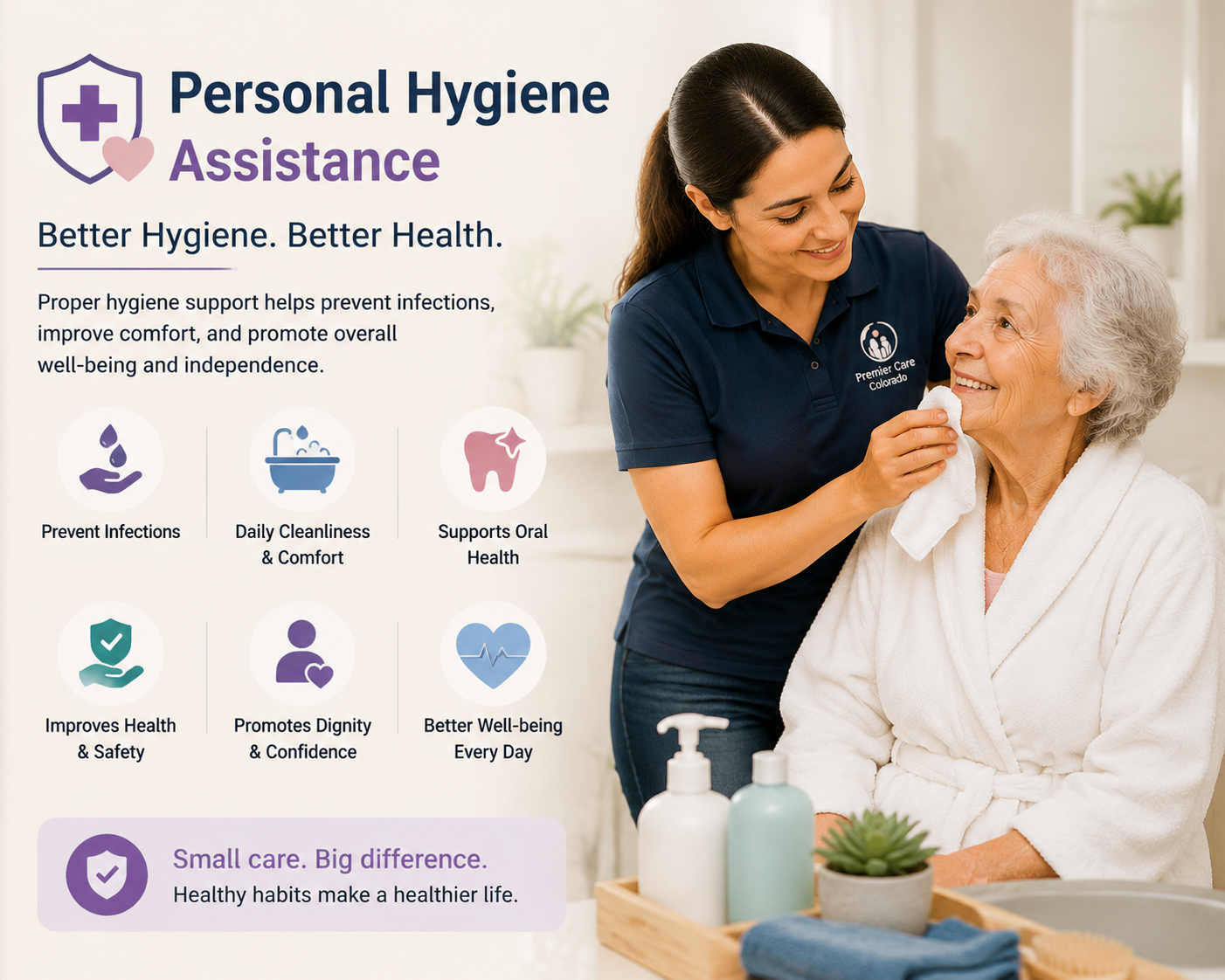
Yes, it significantly reduces the risk of health problems by maintaining proper hygiene, preventing infections, and supporting overall physical health and comfort. Regular personal care helps protect the body, improve well-being, and promote a healthier, safer daily life.
This is where personal hygiene assistance becomes important. With proper support, individuals can stay clean, comfortable, and healthier. Yes, good hygiene care can reduce the risk of many health problems by preventing infections and improving overall well-being. At Premier Care Colorado, compassionate carers help maintain daily hygiene routines that support health, comfort, and independence.
Understanding Personal Hygiene Assistance
Personal hygiene assistance refers to the support provided to individuals who are unable to perform daily hygiene tasks independently. These tasks may include:
- Bathing and showering
- Hand washing
- Oral care and brushing teeth
- Hair care and grooming
- Nail care
- Toileting and incontinence care
- Changing clothes and maintaining cleanliness
Such assistance helps individuals maintain dignity while protecting their physical health.
How Personal Hygiene Assistance Reduces Health Risks
Personal hygiene assistance plays a vital role in preventing infections, promoting overall well-being, and helping individuals maintain their health by ensuring that essential hygiene practices are carried out regularly and effectively.
1. Prevents the Spread of Infections
Poor hygiene creates an environment where bacteria, viruses, and fungi can thrive. Regular bathing, hand washing, and proper toileting practices help remove harmful germs from the body, reducing the risk of infections.
Personal hygiene assistance ensures that individuals who cannot manage these tasks themselves receive the care needed to stay protected from common illnesses such as:
- Skin infections
- Urinary tract infections (UTIs)
- Respiratory infections
- Gastrointestinal illnesses
2. Promotes Healthy Skin
The skin acts as the body’s first line of defense against disease. When hygiene is neglected, sweat, dirt, and bacteria can accumulate, leading to skin irritation, rashes, and infections.
Caregivers who provide hygiene assistance can help:
- Keep the skin clean and dry
- Prevent pressure sores and bedsores
- Identify early signs of skin problems
- Apply moisturizers and protective products when needed
This proactive care helps maintain healthy skin and prevents complications.
3. Improves Oral Health
Oral hygiene is closely linked to overall health. Poor dental care can lead to tooth decay, gum disease, bad breath, and even serious health conditions such as heart disease and respiratory infections.
Personal hygiene assistance ensures regular:
- Tooth brushing
- Flossing
- Denture cleaning
- Oral health monitoring
As a result, individuals experience better oral health and a lower risk of related medical issues.
4. Reduces the Risk of Urinary and Reproductive Health Issues
Proper intimate hygiene is essential for preventing urinary tract infections and maintaining reproductive health. Individuals with mobility limitations or incontinence often require assistance to maintain cleanliness.
Regular hygiene support helps:
- Prevent bacterial growth
- Reduce irritation and discomfort
- Lower the risk of infections
- Improve overall comfort and well-being
5. Supports Mental and Emotional Well-Being
Good hygiene does more than protect physical health. Feeling clean and well-groomed can boost self-esteem, confidence, and emotional well-being.
Individuals who receive personal hygiene assistance often experience:
- Greater comfort
- Reduced stress and anxiety
- Improved social interaction
- Enhanced quality of life
Mental well-being is closely connected to physical health, making hygiene care an essential part of holistic healthcare.
6. Enhances Personal Safety and Prevents Accidents
Personal hygiene assistance can also contribute to an individual’s safety. People with limited mobility, disabilities, or age-related challenges may face difficulties while bathing or using the restroom independently, increasing the risk of slips and falls.
Caregivers can help by:
- Assisting with safe bathing and grooming routines
- Providing support when moving in wet areas
- Ensuring hygiene products are easily accessible
- Monitoring for signs of dizziness or weakness
This support reduces the likelihood of accidents and helps individuals maintain their independence in a safer environment.
7. Encourages Overall Health and Better Quality of Life
Maintaining personal hygiene is a key component of overall health and wellness. When individuals receive regular hygiene assistance, they are more likely to feel comfortable, healthy, and confident in their daily lives.
Benefits include:
- Improved physical health
- Increased confidence and self-esteem
- Better social engagement
- Greater comfort and dignity
- Enhanced overall quality of life
By supporting daily hygiene routines, caregivers help individuals stay healthier and enjoy a more active and fulfilling lifestyle.
The Importance of Caregiver Support
Caregivers play a crucial role in maintaining and promoting healthy hygiene habits for individuals who require assistance with daily personal care. Beyond helping with routine tasks such as bathing, grooming, and oral care, caregivers also serve as the first line of observation for potential health concerns. They can identify early signs of skin changes, oral health issues, infections, or unusual discomfort and pain that may otherwise go unnoticed.
By closely monitoring an individual’s overall condition, caregivers can help ensure that any health problems are detected and addressed promptly. This early intervention not only prevents minor issues from developing into more serious medical conditions but also contributes to better overall health, comfort, and quality of life.
Areas of Personal Hygiene Care
- Body hygiene: Bathing, cleaning skin, and wearing clean clothes to stay fresh and healthy.
- Oral hygiene: Brushing teeth and cleaning the mouth to prevent infections and bad breath.
- Hand hygiene: Washing hands properly to remove germs and stop the spread of disease.
- Nail and hair care: Keeping nails trimmed and hair clean to avoid dirt and bacteria buildup.
- Private hygiene: Cleaning private areas to stay comfortable and prevent infections.
Tips for Maintaining Good Hygiene
Good hygiene does not have to be complicated. Simple daily habits can make a big difference.
- Follow a regular bathing routine.
- Wash hands before meals and after using the restroom.
- Brush teeth twice each day.
- Wear clean clothing.
- Change bedding regularly.
- Use gentle and safe hygiene products.
Many people ask, Is skincare hygiene?’ The answer is yes. Healthy skin care is an important part of personal hygiene because it helps keep the skin clean, protected, and free from irritation.
When to Seek Professional Hygiene Support
Professional support may be necessary when an individual struggles to complete daily hygiene tasks safely.
People with severe mobility limitations, chronic illnesses, post-surgery recovery needs, or ongoing hygiene-related infections may benefit from the help of a trained hygiene caregiver. In some situations, personal care nursing services may be recommended to provide additional support and monitoring. Seeking help early can prevent small hygiene issues from becoming larger health problems.
FAQs:
1. Does personal hygiene assistance include oral care?
Yes, personal hygiene assistance often includes brushing teeth, flossing, denture cleaning, and monitoring oral health to reduce the risk of dental problems and gum disease.
2. How can caregivers help maintain personal hygiene?
Caregivers assist with daily hygiene routines, monitor for signs of health issues, encourage healthy habits, and ensure individuals remain clean, safe, and comfortable.
3. Can poor hygiene affect mental health?
Yes, poor hygiene can impact self-confidence, social interactions, and emotional well-being. Maintaining good hygiene often helps individuals feel more comfortable, confident, and independent.
4. When should professional hygiene support be considered?
Professional hygiene support should be considered when a person has difficulty performing daily hygiene tasks due to age, illness, injury, disability, or recovery from surgery.
5. What are the benefits of professional personal hygiene assistance?
Professional personal hygiene assistance promotes better health, reduces infection risks, improves comfort, enhances dignity and independence, and supports a higher quality of life.
Supporting Better Health Through Personal Hygiene
Good hygiene is one of the most effective ways to support health and prevent illness. Personal hygiene assistance helps individuals stay clean, comfortable, and protected from infections and other health risks. Whether through family support, caregivers, or professional services, proper hygiene care can improve quality of life and promote long-term wellness.
Get compassionate personal hygiene assistance and daily care support with Premier Care Colorado.