
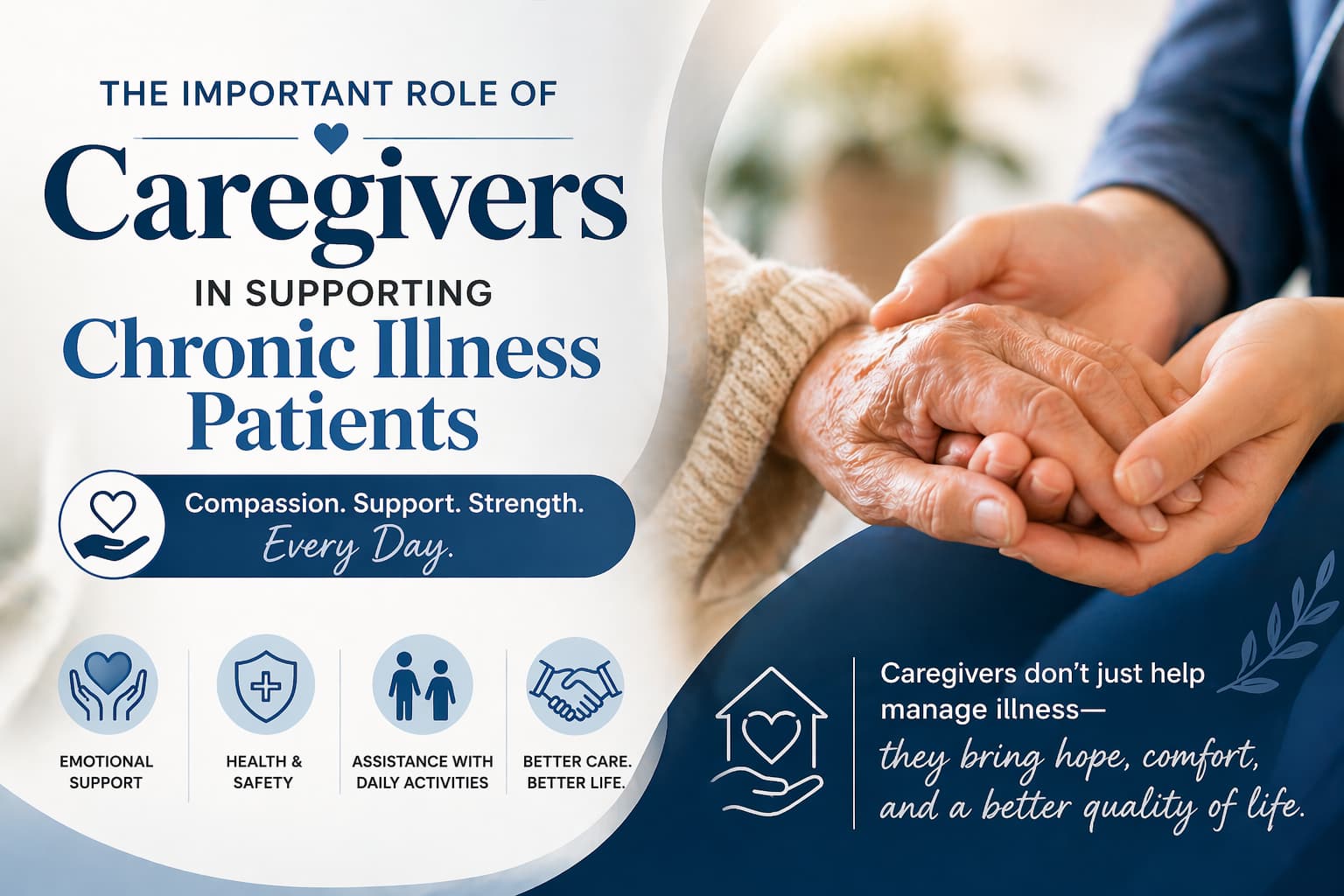
Living with a long-term illness becomes manageable when you understand the important role of caregivers in supporting chronic illness patients. A caregiver helps with daily tasks, manages routines, and provides emotional support, which improves both health and comfort.
The caregiver and patient relationship also builds trust, which makes long-term care more effective and stable. At Premier Care Colorado, we provide trained caregivers who deliver safe and reliable chronic illness care at home. Our team focuses on improving quality of life by offering professional support, daily assistance, and compassionate care for every patient.
What Is Chronic Illness Care at Home?
Chronic illness refers to long-term health conditions such as diabetes, heart disease, or arthritis. These conditions need ongoing support, not just hospital visits.
Therefore, chronic illness home care focuses on helping patients manage their condition safely at home. This type of care includes daily support, monitoring symptoms, and improving comfort.
The Role of a Caregiver in Chronic Health Disorder Management
A caregiver plays a central role in chronic health disorder management. They do more than assist with tasks; instead, they help patients live safer, healthier, and more independent lives. With proper care, patients can manage long-term conditions more effectively at home.
Daily Care and Routine Support
First, caregivers help with daily needs like bathing, dressing, and meals. They also manage medication schedules and health routines to avoid missed doses. In addition, a structured routine helps patients stay organized and reduces daily stress.
This type of effective home care ensures patients stay stable and safe.
Monitoring Health Changes
Next, caregivers watch for small changes in health. For example, they notice pain levels, appetite changes, or unusual symptoms early. Because of this, they can report issues before they become serious.
Early action helps prevent complications and supports better recovery.
Medication Management Support
Caregivers also help patients take the right medicine at the right time. They follow schedules carefully and avoid mistakes in dosage. Moreover, they remind patients about prescriptions and refills.
This support improves safety and keeps treatment on track.
Supporting Independence
At the same time, caregivers encourage patients to do what they can on their own. They guide instead of controlling, which builds confidence. In this way, patients stay active and feel more independent.
As a result, patients feel more in control of their lives.
Emotional and Mental Support
In addition, caregivers provide emotional support during difficult moments. They listen, comfort, and stay present when patients feel stressed or anxious. This connection improves mental health and reduces feelings of loneliness.
Coordination with Family and Healthcare Providers
Caregivers also communicate with family members and healthcare professionals. They share updates about the patient’s condition and follow medical instructions carefully. Therefore, everyone stays informed and involved in the care plan.
Emotional Support for Caregivers and Patients
Chronic illness affects not only the body but also the mind and emotions. Therefore, emotional support for caregivers and patients becomes equally important in daily care. Patients often feel stress, fear, or loneliness, so a caregiver’s kind behavior and support can make a big difference in their overall well-being. Caregivers provide comfort during difficult moments by staying calm and present.
They listen with patience and understanding, which helps patients feel heard and valued. In addition, they reduce feelings of loneliness by offering companionship and emotional connection throughout the day. At the same time, caregivers also need emotional care themselves. Support from family members and regular rest breaks help them stay strong, focused, and able to provide better care.
Tips for Caregivers Supporting Chronic Conditions
Providing care every day can feel challenging. However, these tips for caregivers supporting chronic conditions can make the process easier:
Create a Daily Care Plan
First, set a simple routine for meals, medication, and rest. A clear plan reduces confusion and stress.
Focus on a Clean and Safe Environment
Next, keep the home clean and safe. Remove risks like loose rugs or clutter to prevent falls.
Communicate Clearly
Also, talk openly with the patient and family members. Clear communication improves trust and care quality.
Take Care of Yourself
Finally, caregivers must care for their own health. Rest, proper diet, and short breaks improve energy and focus.
Chronic Disease Care Services at Home
Many families choose professional chronic disease care services for better support. These services provide trained caregivers who understand medical and personal care needs.
They help with:
- Medication reminders
- Mobility support
- Personal hygiene
- Meal preparation
Professional care improves safety and reduces family stress.
Leaves Personal Care: Why It Matters
When illness becomes serious, families often leave personal care tasks to trained caregivers. This ensures proper hygiene and comfort for the patient.
Personal care includes:
- Bathing and grooming
- Dressing assistance
- Toileting support
Proper care reduces infection risks and improves dignity.
Caring for the Sick at Home
Caring for the sick at home requires patience, consistency, and full attention. Caregivers play an important role because they balance both physical care and emotional support in daily routines. This balance helps patients feel safe and supported while staying in their familiar home environment.
Caregivers help patients follow their treatment plans properly so recovery stays on track. In addition, they make sure patients stay comfortable by assisting with daily needs and reducing physical strain. They also treat patients with respect and dignity, which makes them feel valued and cared for. Because of this combined support, home care becomes a safe and trusted option for long-term recovery.
Benefits of Chronic Illness Home Care
Choosing chronic illness home care offers many benefits:
- Patients stay in a familiar environment
- Families stay involved in care
- Costs are often lower than those in hospitals
- Recovery becomes more comfortable
In addition, home care supports long-term health management.
Caregiver and Patient Relationship Improves Health
A strong caregiver and patient relationship builds trust and comfort. When patients trust their caregiver, they follow routines better and feel less stress.
This connection:
- Improves emotional health
- Encourages cooperation
- Builds confidence
As a result, overall care becomes more effective.
FAQs:
What is chronic illness care at home?
Chronic illness care at home means supporting patients with long-term conditions through daily care, monitoring, and emotional support in their own home.
What are the tips for caregivers supporting a chronic condition?
Helpful tips for caregivers supporting chronic conditions include creating routines, maintaining safety, communicating clearly, and taking care of personal health.
Why is emotional support important in caregiving?
Emotional support for caregivers and patients reduces stress, improves mental health, and strengthens relationships.
What services are included in chronic disease care services?
Chronic disease care services include personal care, medication support, mobility help, and daily assistance.
Choosing the Right Support for Chronic Care
Managing a long-term illness becomes easier with the right support system. Caregivers play a vital role in improving health, comfort, and independence every day.
At Premier Care Colorado, caregivers do more than assist with tasks. They provide reliable, compassionate, and professional support for families who need trusted chronic illness care at home.